Executive Summary — The American Pivot
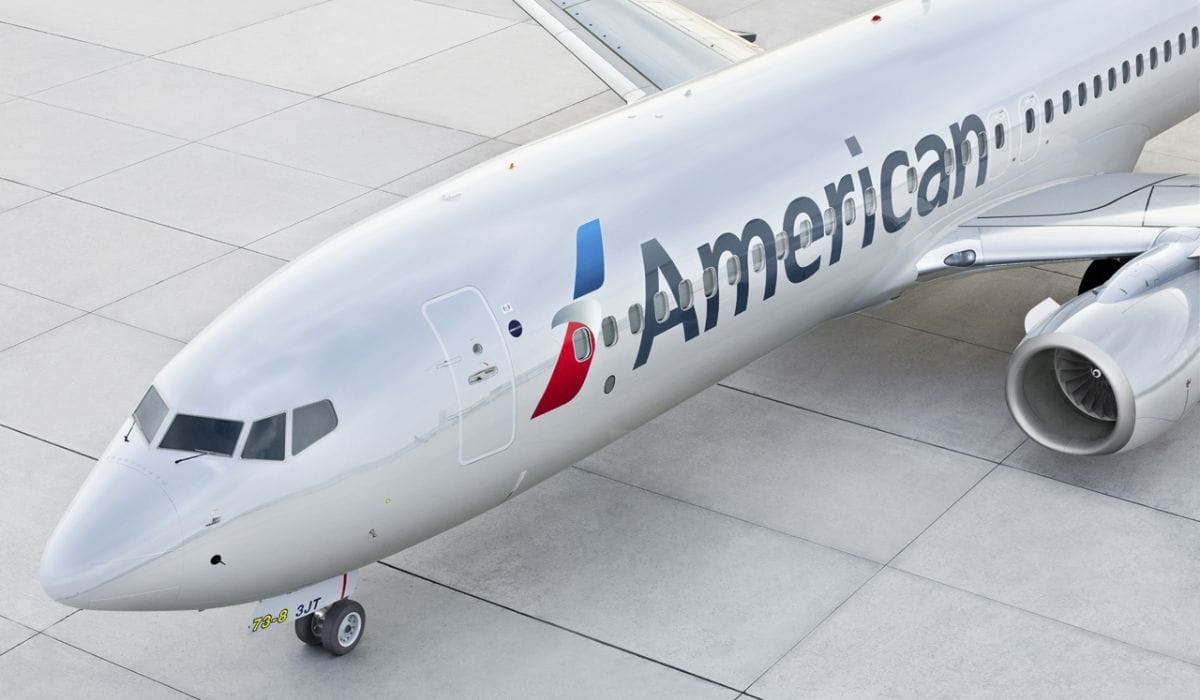
As 2026 begins, American Airlines has moved from a period of distribution friction to a pragmatic, partner-led approach to Modern Airline Retailing. The carrier’s recent strategic reset balances innovation with market access: rather than pursuing rapid disintermediation, management has emphasised collaboration with corporate travel channels and pragmatic industrialisation of Offers, Orders, Settlement and Delivery (OOSD) capabilities.
The autumn of 2025 marked a turning point. Management reinforced commercial leadership and signalled renewed engagement with agency workflows while continuing to expand NDC and offer-management capabilities. Under CEO Robert Isom and Chief Commercial Officer Nathaniel (Nat) Pieper (appointed in late 2025), American has prioritised restoring corporate confidence, stabilising premium demand and putting a disciplined economics framework around retail modernisation.
Modern Airline Retailing: The OOSD Implementation Series
Part 2: American Airlines and the Collaborative Retailing Reset
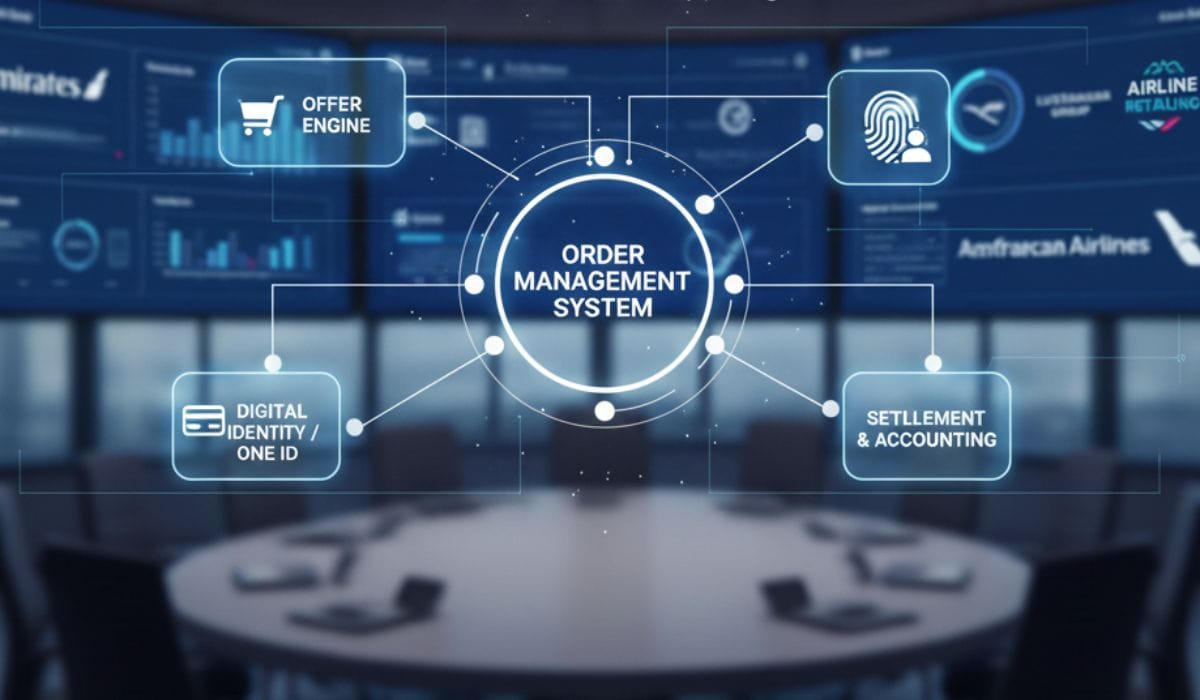
This series examines how members of the IATA Airline Retailing Consortium are translating the Offers and Orders target operating model—spanning Offer Creation, Order Management, Settlement, and Delivery—into operational reality. Moving beyond high-level announcements, it focuses on execution: sequencing change, managing coexistence with legacy systems, and aligning commercial, operational, and financial priorities.
American Airlines represents a contrasting but equally instructive case. As the world’s largest carrier by fleet size and passenger volumes, with a complex mix of domestic, international, corporate, and loyalty-driven revenue streams, its retail transformation must operate at exceptional scale. The airline’s recent shift from distribution confrontation to collaborative implementation offers practical insight into how Modern Airline Retailing can be stabilised, governed, and monetised within a highly intermediated market.
Leadership and Governance: Commercial Stewardship
The late-2025 refresh of the commercial leadership signalled a governance-led approach to the transformation. The commercial agenda now explicitly bridges revenue management, distribution, loyalty and sales under a single stewardship model, making commercial strategy the primary driver of retail modernisation.
Implementation is overseen by a cross-functional steering group that includes commercial, technology, operations and finance representation. This governance construct is intended to ensure that pricing innovation, servicing capability and financial controls evolve together rather than as disconnected projects — a prerequisite for converting technical capability into durable commercial advantage.
The Technology Architecture: Modularity at Scale
American’s retail transformation is underpinned by a deliberately modular technology architecture, designed to avoid dependency on any single vendor while supporting the controlled migration toward order-native operations. This approach enables progressive industrialisation without compromising operational resilience.
Offer Management: Datalex Stellex
Deployed in late 2024 and expanded through 2025, Datalex’s Stellex platform forms the core of American’s offer management capability. It supports dynamic bundling, continuous pricing, and personalised packaging across fare families and premium products, including Flagship services. These capabilities underpin the airline’s shift away from static fare construction toward demand-responsive retailing.
Payments and Settlement: DLX Pay and Gr4vy
In 2025, Datalex integrated Gr4vy’s cloud-native payment orchestration into DLX Pay. For American, this has expanded local payment options, reduced settlement friction, and improved reconciliation efficiency. While full Settlement with Orders (SwO) remains an industry-wide objective, payment orchestration has materially shortened settlement cycles and improved financial visibility.
Distribution and Servicing: Sabre NDC
American has reinforced its partnership with Sabre to enhance NDC-based order servicing. Agents are increasingly able to manage involuntary changes, rebooking, and refunds within modern distribution workflows — a prerequisite for sustained corporate adoption and channel confidence.
Restoring Agency and Corporate Confidence
Commercial recovery depended on two complementary actions. First, American restored and standardised agency workflows in key global channels to repair commercial relationships and re-enable managed travel buying. Second, the airline invested in channel parity — ensuring that offers sold indirectly can be serviced to the same standard as direct bookings.
This technical-commercial pairing — product parity plus dependable servicing — has been central to regaining placements in corporate programmes and stabilising managed travel volumes.
Managing Look-to-Book Economics
As personalised offers proliferate, so does search traffic. Uncontrolled look-to-book ratios raise compute costs and can overload retail systems. American has introduced filtering and prioritisation techniques that screen low-intent shopping traffic and protect backend capacity for high-value requests. These controls are not a cure; they are cost-control mechanisms that place look-to-book pressure within defined operational and economic bounds.
For finance leaders, this is as important as the revenue story: controlling compute intensity, deflecting non-actionable demand, and reducing downstream servicing costs are central to preserving margin as retail complexity increases.
Financial Impact and Commercial Metrics
American’s reset is being measured with a disciplined CFO scorecard that links product innovation to financial outcomes. Key metrics include:
Incremental revenue per passenger from dynamic offers;
Distribution cost per booking;
Payment and settlement cycle time;
Compute and transaction cost per search;
Call-centre and manual servicing volumes associated with disruptions.
Early signs through late 2025 indicate recovery in corporate volumes, improving premium yields and stronger loyalty engagement. Management continues to evaluate the programme against hard economic targets rather than technology milestones alone.
Risk Management: Principal Exposures and Mitigations
The principal risks associated with this transition are clear and actively managed:
Operational complexity: Hybrid PNR–Order environments increase servicing touchpoints. Mitigation: phased coexistence and focused automation of high-volume servicing flows.
Regulatory and reporting constraints: many compliance processes remain ticket-based. Mitigation: regulatory engagement and incremental reporting adapters.
Agency adoption lag: inconsistent servicing delays corporate reintegration. Mitigation: commercial accommodations, training and certification for major TMCs.
Technology cost inflation: personalisation increases cloud and compute bills. Mitigation: traffic filtering, cost governance, and prioritisation of high-value use cases.
Change management: frontline adoption variance. Mitigation: targeted operational playbooks and metrics-driven rollout.
2026 Outlook: From Offer Creation to Delivery at Scale
In 2026 the emphasis shifts from offer experimentation to industrialising delivery and servicing. Priority initiatives include:
Scaling order-based disruption recovery with greater automation and reduced manual re-accommodation;
Integrating premium and ancillary products into persistent order records;
Progressing payment and settlement efficiencies in coordination with industry partners;
Expanding order servicing coverage to a broader set of corporate accounts.
American’s approach is intentionally pragmatic: industrialise order capabilities where they deliver measurable commercial or operational value, while preserving established market access and service reliability.
Conclusion — A Pragmatic Reference Model
American’s recent reset offers a practical lesson for legacy carriers: commercial restoration and technical modernisation are complementary, not contradictory. By combining modular architecture, disciplined governance, and deliberate commercial diplomacy, the airline is converting retail innovation into measurable, recoverable economics.
That balance — rather than unilateral disruption — is emerging as a credible reference model for large network carriers navigating Modern Airline Retailing at scale.
References & Further Reading
Wolstonbury — Commercial Aviation Strategy, Delivered with Clarity and Purpose.
Want more analysis like this? Click the ‘Join the Newsletter’ button to receive the next edition.