Executive Summary
United Airlines’ successful overnight migration of its SHARES reservations system in February 2026 marks a rare example of large-scale airline infrastructure modernisation executed without material disruption, reflecting years of disciplined preparation and conservative operational planning. By moving a core transactional workload into a cloud-enabled environment, United has strengthened the technical foundations required for dynamic offer creation, NDC distribution and broader OOSD adoption, while reducing exposure to the cascading failures that have afflicted rivals in recent years. Although vendor-backed claims of productivity gains and cost savings warrant independent validation, the migration underscores how operational resilience has become a strategic asset rather than a technical afterthought. For an industry increasingly dependent on data-intensive retailing and personalised pricing, United’s approach illustrates that sustained competitive advantage rests less on technological ambition than on execution, governance and institutional discipline.
United’s SHARES Migration Succeeds — an infrastructure win for modern retailing
Chicago — 4 February 2026. United Airlines completed a planned overnight migration of its SHARES reservations platform, transferring mission-critical data from a North Carolina data centre to a more modern facility in Chicago during a scheduled early-morning outage. United said the operation proceeded with minimal disruption and represents the culmination of a long programme to move legacy workloads toward cloud infrastructure — a prerequisite, the airline argues, for next-generation retailing such as Offer-and-Order and broader New Distribution Capability (NDC) deployments.
The cutover was not merely a maintenance activity. For United it was a high-stakes systems migration: SHARES is the airline’s core passenger reservation engine, a line of code and operational logic that traces its commercial lineage through Continental’s legacy systems and the post-merger consolidation in the early 2010s. Consolidating and modernising that core has been a multi-year programme of application rationalisation, rehearsals and phased cloud transition — work that, according to United and its cloud partner, has already delivered material savings and productivity gains.
Why this mattered
Airlines are painfully familiar with what can go wrong when critical systems fail. A single vendor update or a faulty piece of hardware can cascade into thousands of cancellations and reputational damage. The industry’s recent years are littered with reminders: Delta’s July 2024 outage tied to a problematic security-software update led to large-scale cancellations and legal action; Alaska Airlines’ July 2025 ground stop was attributed to third-party hardware failure; American and other carriers have also reported multi-hour booking outages in 2025. The US Department of Transportation’s enforcement action and fines following Southwest’s December 2022 meltdown remain a high-water mark for operational and regulatory consequences. Those events have reshaped executive thinking: reliability is a prerequisite for innovation.
United’s playbook
What set United’s operation apart — according to company statements and contemporary reporting — was process: repeated rehearsals, conservative scheduling, proactive trimming of the schedule during the window and transparent customer communications. The airline publicly advised passengers to check in before the outage window and removed departures in the early-morning hours to create operational slack. That conservative posture reduced the risk of a cascading failure where a single failed transaction or queue backlog becomes an airport-level crisis.
Technically, the cutover amounts to moving a mainframe-hosted transactional workload into a cloud environment and the surrounding services that support it. That transition unlocks three immediate capabilities that matter for retailing and operations:
- Real-time integration. Cloud services make it easier to unify revenue-management signals, ops data and customer profiles into a single streaming fabric — the raw material for dynamic, personalised offers.
- Elastic compute. Pricing and offer algorithms are computationally intensive: cloud infrastructure permits on-demand scale during booking peaks without the expensive, wasteful over-provisioning that characterised older data-centre models.
- Advanced analytics and AI. Managed ML services and generative models accelerate experimentation with personalised bundles, disruption recovery logic and predictive maintenance.
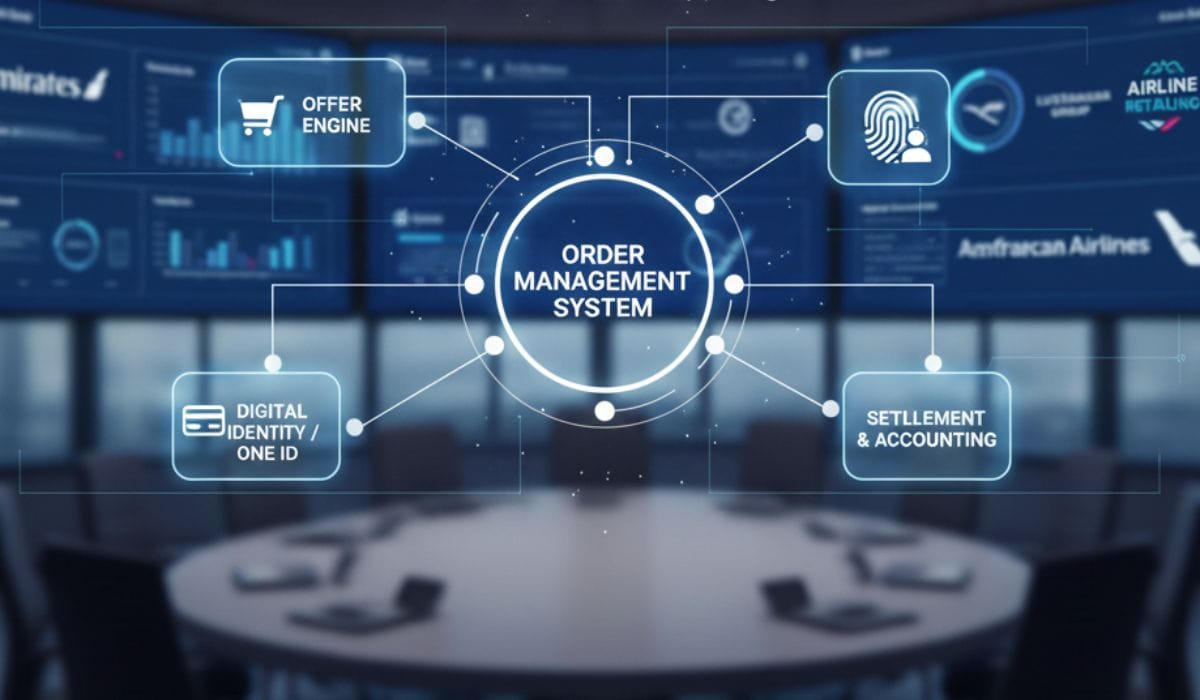
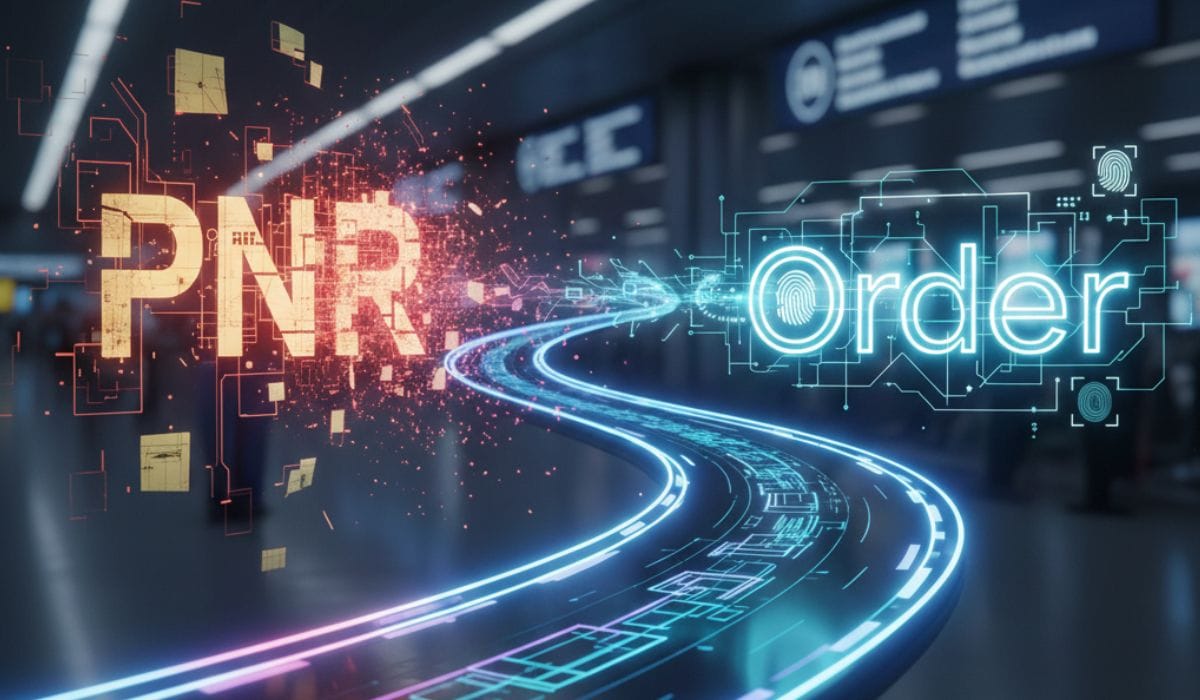
Those capabilities are precisely what the industry calls Offer, Order, Settlement and Delivery (OOSD): a four-stage re-architecting of the retail stack that lets airlines create, sell, reconcile and fulfil rich, dynamic offers rather than static published fares. In practice OOSD requires streaming data pipelines, low-latency order management and settlement rails that interoperate with agencies and payment platforms — workloads poorly suited to monolithic mainframes but well served by cloud architectures. (For practical adoption, NDC remains the primary distribution standard to transmit richer product content across agency channels.)
What to read into the numbers
Publicly available case studies from United’s cloud partner are bullish: United’s AWS materials cite productivity gains and a multi-billion-dollar infrastructure savings figure as part of the carrier’s digital transformation narrative. Those are vendor-sourced claims and should be presented as such; independent auditors and United’s financial disclosures will be the definitive arbiters of realised savings and productivity improvements. Still, the combination of demonstrated cost-avoidance and faster developer cycles is precisely the economic case airlines need to justify multi-year migrations that risk short-term cost and execution complexity for longer-term platform advantage.
NDC and the business case for cloud
NDC — IATA’s XML-based standard for richer merchandising and direct offer distribution — is not new, but it becomes materially more powerful when airlines can generate differentiated, continuous prices and route those offers through modern order management. United has expanded NDC availability with major distribution partners over recent years, enabling agencies to book richer offers through direct APIs rather than legacy EDIFACT exchanges. Those partnerships matter because distribution economics — lower GDS fees, higher ancillaries penetration, and more granular control of offer content — are central to the commercial ROI of cloud migrations.
Execution is the competitive barrier
The migration’s strategic value lies less in novelty than in discipline. Many carriers have the same strategic goal — richer offers, improved customer-centric merchandising, and lower distribution friction — but do not yet have a clear, proven engineering template to remove single points of failure without disrupting daily operations. United’s approach combined extensive rehearsal, conservative operational changes during the outage window, and the ability to fall back if necessary. That combination of governance, change control and executive sponsorship is what turns a technology programme from a speculative investment into an operational capability.
What to watch next
A successful cutover is necessary but not sufficient. The measures that will test the migration’s business case are forward-looking: sustained reductions in system incidents, improved on-time performance during peak rebooking events, measurable increases in NDC-channel revenue or ancillary attachment, and independent confirmation of the vendor-quoted productivity and cost figures. Investors and industry watchers should look for these signals in quarterly results, operational reports and third-party monitoring over the next two to four quarters.
A pragmatic lesson
In an industry still smarting from widely publicised IT failures, executing a major infrastructure migration without incident should not be celebrated as a novelty. But the context matters: given the scale and frequency of recent outages across multiple carriers, the ability to modernise a mission-critical reservation engine without cascading passenger harm is a meaningful operational achievement. It demonstrates that methodical engineering, conservative operational design and transparent customer communications — the unglamorous disciplines of systems engineering — remain the most reliable route to modern retailing.
United’s migration does not close the book. It opens the next chapter: deploying the cloud-native services that will enable dynamic offers at scale, integrating order lifecycle events with settlement rails, and proving the commercial upside of NDC-first distribution. If the airline delivers measurable reliability gains alongside the promised commercial benefits, the SHARES cutover will look less like a risky gamble and more like a foundational infrastructure decision — one that turns operational resilience into a platform for commercial innovation.
References & Further Reading
Wolstonbury — Commercial Aviation Strategy, Delivered with Clarity and Purpose.
Want more analysis like this? Click the ‘Join the Newsletter’ button to receive the next edition.