


Sabre Corporation: At a Crossroads of Transformation and Shareholder Pressure
Wolstonbury — Commercial Airline Consultancy | Strategy · Revenue · Innovation
Jump to Section
ToggleBeyond Price: The Future of Airline Revenue Management
Wolstonbury
2025-12-14
Airline Leadership & Organisation,Airline Retailing & Distribution,Blog,Commercial Strategy,Industry Insights,Revenue Management
Revenue Management Insights: From Founder Experience to Modern Airline Strategy
Reflections from Founder Simon C. Pitt on how airline revenue management is evolving
Airline revenue management has never been static. Yet few periods in the industry’s history have required as much change — in mindset, structure, and capability — as today. What was once a specialist function focused on pricing and inventory control has become a central pillar of airline commercial strategy, influencing network decisions, retailing models, customer experience, and long‑term profitability.
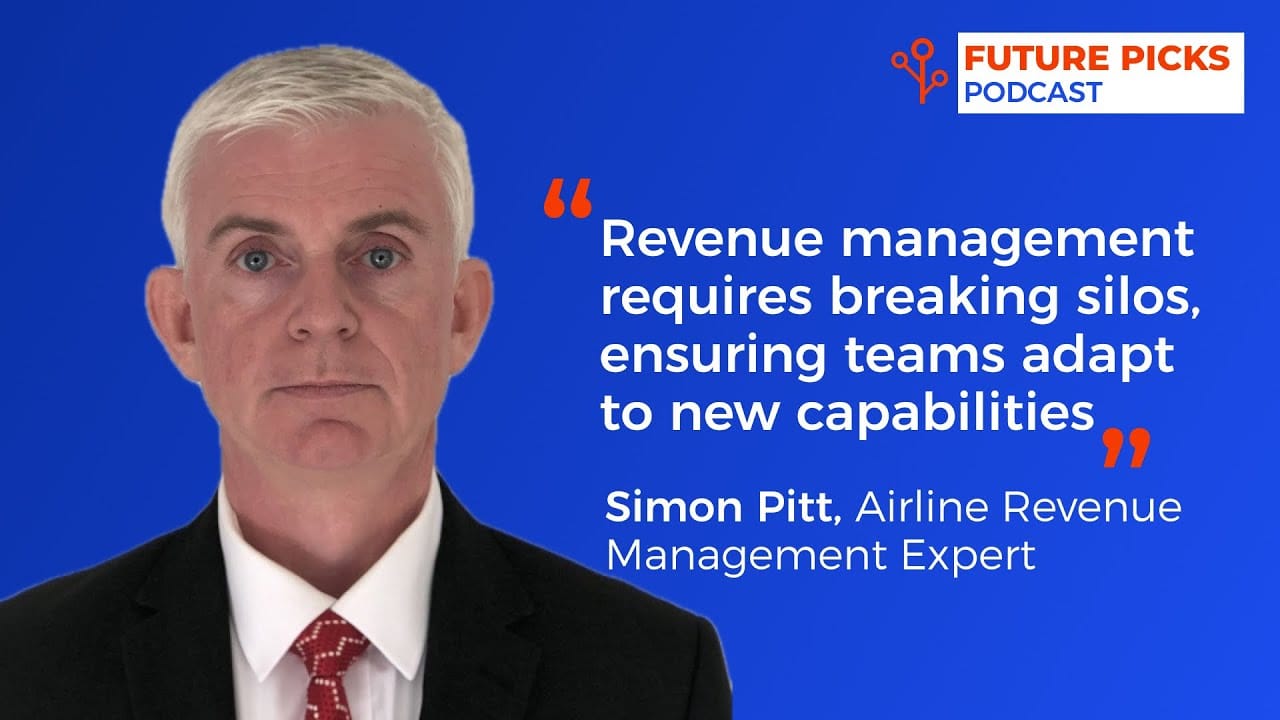
In an interview with Branchspace, Wolstonbury Founder Simon C. Pitt reflected on his career across multiple airlines and markets, sharing practical insight into how revenue management has evolved and where it must go next. His perspective is grounded in lived leadership experience — navigating technology change, organisational complexity, and shifting customer expectations.
This article distils those insights and frames them through a modern commercial lens, highlighting what airline leaders should focus on now and what will define successful revenue management in the years ahead.
From Flight-Level Control to Network Thinking
In its early form, airline revenue management was largely tactical. Teams focused on optimising individual flights, managing booking classes, and adjusting availability based on forecast demand. This approach worked in simpler networks but became increasingly constrained as airlines expanded, hubs grew, and connecting traffic became more valuable.
The introduction of Origin and Destination (O&D) control represented a fundamental shift. Rather than treating flights as independent products, airlines could evaluate passenger journeys across the network and prioritise higher‑value itineraries over lower‑yield traffic.
Simon notes that this transition changed how airlines thought about value creation. Revenue management moved beyond filling seats to supporting network strategy, hub development, and competitive positioning.
However, O&D optimisation also reinforced a recurring industry lesson: technology alone does not create value. Airlines that succeeded invested not only in systems, but in new skills, clearer roles, and closer integration with broader commercial decision‑making.
The Expanding Scope of Revenue Management
One of the strongest themes from Simon’s interview is how dramatically the scope of revenue management has expanded.
Today, revenue decisions extend far beyond fares and availability. They shape:
How products are bundled and presented
Which customers receive which offers
How ancillaries and partner products are monetised
How revenue objectives align with digital and loyalty strategies
This reflects a broader shift in airline economics. As base fares become more transparent and competitive, total revenue per customer — not just ticket yield — becomes the key measure of success.
Revenue management teams now draw on booking behaviour, lead time, channel data, and customer segmentation to guide decisions. The role is increasingly about understanding customer intent as much as managing price points.
Technology: Powerful, but Only in the Right Context
The interview reinforces a critical reality for airline leaders: technology is essential, but it is not a silver bullet.
Modern revenue management systems are significantly more sophisticated than their predecessors, incorporating advanced forecasting, optimisation, and increasingly AI‑driven techniques. Yet Simon emphasises that system capability must be matched by organisational readiness.
To extract real value, airlines need:
High‑quality, well‑governed data
Clearly articulated commercial objectives
Teams confident enough to question and interpret system outputs
Strong collaboration between revenue, pricing, network, and digital functions
Without these foundations, advanced tools risk becoming expensive black boxes — either followed blindly or underutilised. Technology should enhance human judgement, not replace it.
Offer and Order Management: Redefining Airline Retailing
A key forward‑looking theme from the discussion is the industry’s move toward Offer and Order Management Systems (OMS).
Traditional Passenger Service Systems were built around flights, fares, and tickets. OMS architectures are built around customers, offers, and orders, enabling airlines to dynamically assemble and price products in real time.
This shift has significant implications:
Pricing becomes contextual rather than static
Inventory control and retail presentation converge
Personalisation becomes commercially actionable
Simon highlights that OMS represents more than a technology upgrade. It requires airlines to rethink ownership, governance, and decision rights across the commercial organisation. Revenue management, pricing, and digital commerce can no longer operate in isolation.
People and Organisation: The True Differentiator
Throughout the interview, one theme is consistent: people matter more than systems.
As revenue management grows in strategic importance, teams must combine analytical capability with commercial judgement, communication skills, and a strong understanding of customer behaviour.
Organisational structure plays a decisive role. Airlines that maintain rigid silos between revenue management, pricing, sales, and digital teams struggle to deliver coherent retail strategies. Those that move toward integrated commercial models are better positioned to respond to market change.
Leadership alignment is critical. Without clear direction and shared objectives, even well‑designed organisations fail to realise the potential of modern revenue management.
Managing Change in a Legacy Environment
Few airlines operate on a clean slate. Legacy systems, processes, and constraints shape what is possible in the short term.
Simon offers a pragmatic view of transformation: progress is typically incremental. Successful airlines tend to:
Modernise systems selectively
Introduce new capabilities alongside legacy platforms
Invest continuously in skills and capability
Prioritise commercial outcomes over technical perfection
Waiting for an ideal future‑state architecture often delays value creation. Momentum and learning matter more than perfection.
Implications for Airline Leaders
For senior commercial leaders, the lessons are clear:
Revenue management is no longer a back‑office function
Competitive advantage comes from integrating people, process, and technology
Customer‑centric revenue strategies outperform price‑led approaches
Organisational design matters as much as system choice
In today’s environment, revenue management does more than optimise revenue. It shapes how airlines compete, how they retail, and how they engage with customers.
A Founder’s Perspective
Wolstonbury was established on the belief that airlines achieve the greatest value when commercial strategy, revenue management, and organisational capability are aligned.
Simon Pitt’s reflections reinforce that belief. The future of airline revenue management will not be defined by algorithms alone, but by leadership choices — how airlines structure teams, deploy technology, and keep the customer at the centre of decision‑making.
For airlines navigating complexity and change, revenue management remains one of the most powerful commercial levers available. Used well, it delivers not just higher revenue, but more resilient and sustainable performance.
A Wolstonbury Perspective
At Wolstonbury, we work with airline leadership teams on exactly these challenges — aligning revenue management capability with broader commercial strategy, organisational design, and practical execution.
Our focus is not on selling systems or prescribing one-size-fits-all solutions. It is on helping airlines ask the right questions, make informed trade-offs, and build commercial models that work within their real-world constraints.
As revenue management continues to evolve, clarity of intent, strength of leadership, and alignment across the organisation will matter as much as any technology choice. These are the foundations on which sustainable commercial performance is built.
Wolstonbury — Commercial Aviation Strategy, Delivered with Clarity and Purpose.
Want more analysis like this? Click the ‘Join the Newsletter’ button to receive the next edition.
Continue the Transformation Journey
Sabre Corporation faces financial recovery, shareholder pressure from Constellation Software, and a pivotal retailing transition with SabreMosaic.
How Finnair is using Amadeus Nevio and ONE Order architecture to modernise airline retailing and reduce legacy system complexity.
How United Airlines modernised its SHARES platform, reduced operational risk, and built the foundation for NDC and modern airline retailing.
Modern Airline Retailing: The OOSD Implementation Series – Part 3: Emirates & The Gateway Authority
•
2026-02-04
How Emirates is using NDC, OOSD, and its Gateway platform to strengthen premium merchandising, servicing, and airline retail strategy.