Sabre Corporation: At a Crossroads of Transformation and Shareholder Pressure
Wolstonbury — Commercial Airline Consultancy | Strategy · Revenue · Innovation

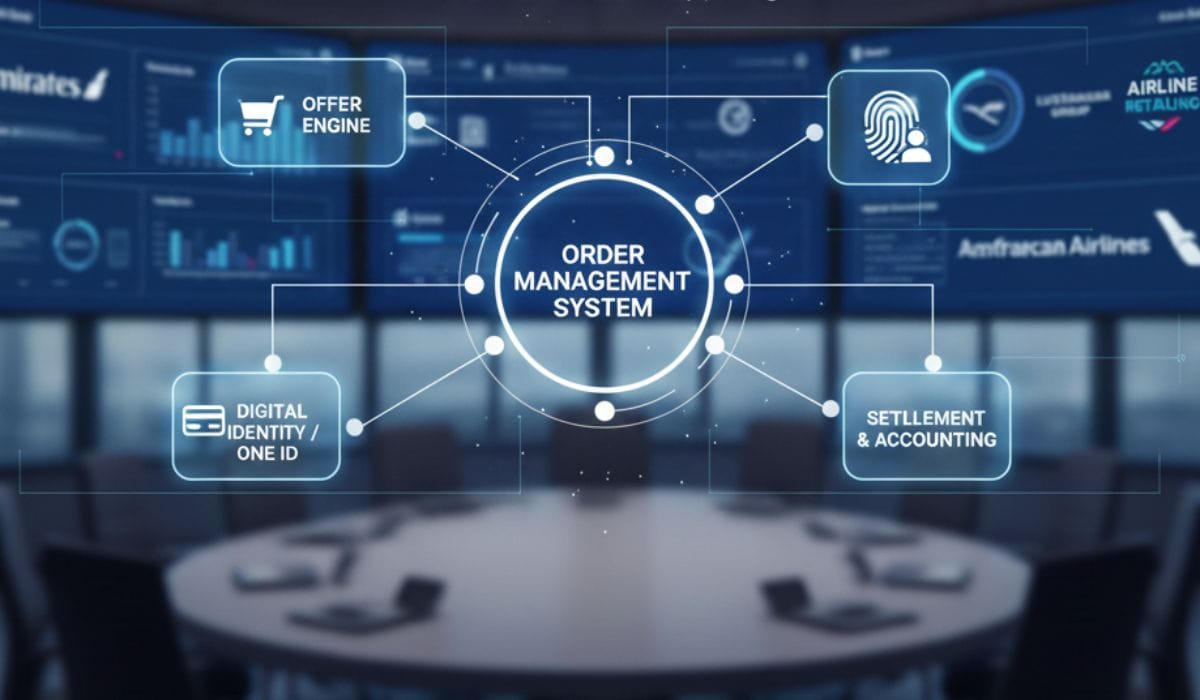
The Coalition: A Global, Cross‑Alliance Representation
The Consortium’s authority is derived from both scale and operational diversity. Its membership spans alliances, geographies, and operating models, ensuring that MAR standards are shaped by real-world airline complexity rather than theoretical design.
Founding and Core Members
Architects of the Consortium’s three MAR pillars—Customer Identification, Retailing with Offers, and Delivery with Orders:
- Emirates
- Lufthansa Group (Lufthansa, SWISS, Austrian Airlines, Eurowings, Brussels Airlines, Air Dolomiti)
- American Airlines
- Air France–KLM
- International Airlines Group (British Airways, Iberia)
- Singapore Airlines
- Finnair
- Oman Air
Expanded Membership (2023–2025)
Airlines contributing additional scale, regulatory diversity, and implementation experience:
This breadth ensures that Consortium outputs remain compatible with network, hybrid, and long‑haul business models.
Beyond a Working Group: Industrialising Modern Airline Retailing
The Consortium functions as an execution forum rather than a theoretical think tank. Member airlines are intentionally absorbing implementation risk—deploying first, learning in production, and feeding outcomes directly back into IATA standards and guidance.
Three workstreams are central to this role:
Offers and Orders: Operationalising One Order
Consortium airlines are implementing the IATA One Order concept as the target state for order-based airline operations. While full retirement of PNRs and electronic tickets remains a multi‑year journey, several members are already operating live Order Management capabilities in parallel with legacy environments.
These include post‑booking servicing, ancillary fulfilment, and disruption handling using a single Order ID as the commercial and operational record, materially reducing fragmentation across the customer lifecycle.
Financial Transformation: Settlement with Orders (SwO)
Through progressive adoption of Settlement with Orders, Consortium airlines are reducing dependency on ticket-based clearing and batch reconciliation. Early production deployments demonstrate improved cash cycles, simplified accounting processes, and reduced revenue leakage.
For CFOs, SwO reframes Modern Airline Retailing as a working‑capital, control, and risk‑reduction initiative—not solely a revenue optimisation exercise.
Airline‑Led Vendor Direction
A critical outcome of the Consortium is the establishment of a unified airline voice toward technology providers. Members are issuing explicit requirements to PSS, Offer Management, Order Management, and accounting system vendors—such as Amadeus, Sabre, and Accelya—based on IATA MAR standards.
This marks a structural shift away from vendor‑defined evolution toward airline‑defined retailing capability, supported by modular architecture and open interfaces.

From IT Modernisation to Enterprise Transformation
A defining feature of the 2026 phase is governance. Among Consortium airlines, Modern Airline Retailing is no longer positioned as an IT or digital initiative. It is now an enterprise transformation with clear C‑suite accountability:
- Chief Executive Officer: Retailing as a strategic growth and differentiation lever
- Chief Financial Officer: Order-based settlement, cash acceleration, and financial simplification
- Chief Commercial Officer: Continuous pricing, dynamic product creation, and channel consistency
- Chief Information Officer: Modular architecture, delivery discipline, and vendor orchestration
This shift in ownership is proving essential as airlines move from experimentation to scaled operational deployment.
2026: The Pivot to Production
For airline leadership, 2026 is the point at which MAR strategy translates into measurable operational and financial performance. The Consortium’s execution agenda now focuses on four production‑grade priorities:
Modular Architecture and PSS Decoupling
Consortium airlines are progressively decoupling retailing and order management capabilities from monolithic PSS environments. Control of the Offer and the Order is returning to the airline, reducing long‑term dependency while increasing speed of innovation.
Interline and Partner Retailing
Through the Standard Retailer and Supplier Interline Agreement (SRSIA), airlines are enabling retail‑grade selling of interline, rail, and partner content using consistent Offer and Order constructs.
Disruption Management and Servicing
Order‑centric processes are enabling higher levels of automation in disruption scenarios, particularly for re‑accommodation and servicing. Early results indicate reduced call‑centre demand and measurable improvements in customer satisfaction metrics.
Transition Reality
Consortium airlines are transparent about remaining challenges:
- Co‑existence of ticket/PNR and Order models during transition
- Operational change management across airports and customer service
- Regulatory and reporting frameworks still aligned to ticketing constructs
The Consortium’s value lies in addressing these challenges collectively and embedding solutions directly into IATA standards.
The Business Case: Value Creation Through Modern Airline Retailing
Joint analysis by IATA and BCG indicates that full adoption of Modern Airline Retailing can unlock USD 7–10 of incremental value per passenger. This value is driven by four clearly identifiable levers:
- Revenue: Continuous pricing, personalised Offers, and expanded post‑booking retailing
- Cost: Simplified servicing, lower distribution complexity, and reduced accounting overhead
- Cash: Faster settlement cycles enabled by Orders
- Risk: Reduced reconciliation errors and declining reliance on ageing, tightly coupled systems
In an environment of margin pressure and capital discipline, MAR adoption is increasingly a fiduciary responsibility for airline leadership.
Strategic Consequence: A Structural Divide
By 2026, the industry is entering a clear structural bifurcation:
- MAR‑enabled airlines will control pricing, product design, and customer relationships
- Ticket‑centric airlines will remain constrained by fare filing, document logic, and vendor‑paced innovation
The IATA Airline Retailing Consortium is not simply modernising airline commerce—it is defining the operating model that will separate long‑term value creators from structural laggards in the decade ahead.
References & Further Reading
- IATA (2025): Modern Airline Retailing – Transition to 100% Offers and Orders
- IATA & BCG (2024): The Value of Modern Airline Retailing: A Roadmap for Airline Leadership
- IATA (2025): One Order Standards and Implementation Guidance
- Travel in Motion (2026): Modern Airline Retailing Insights: The End of the
Wolstonbury — Commercial Aviation Strategy, Delivered with Clarity and Purpose.
Want more analysis like this? Click the ‘Join the Newsletter’ button to receive the next edition.

Sabre Corporation faces financial recovery, shareholder pressure from Constellation Software, and a pivotal retailing transition with SabreMosaic.
How Finnair is using Amadeus Nevio and ONE Order architecture to modernise airline retailing and reduce legacy system complexity.

How United Airlines modernised its SHARES platform, reduced operational risk, and built the foundation for NDC and modern airline retailing.
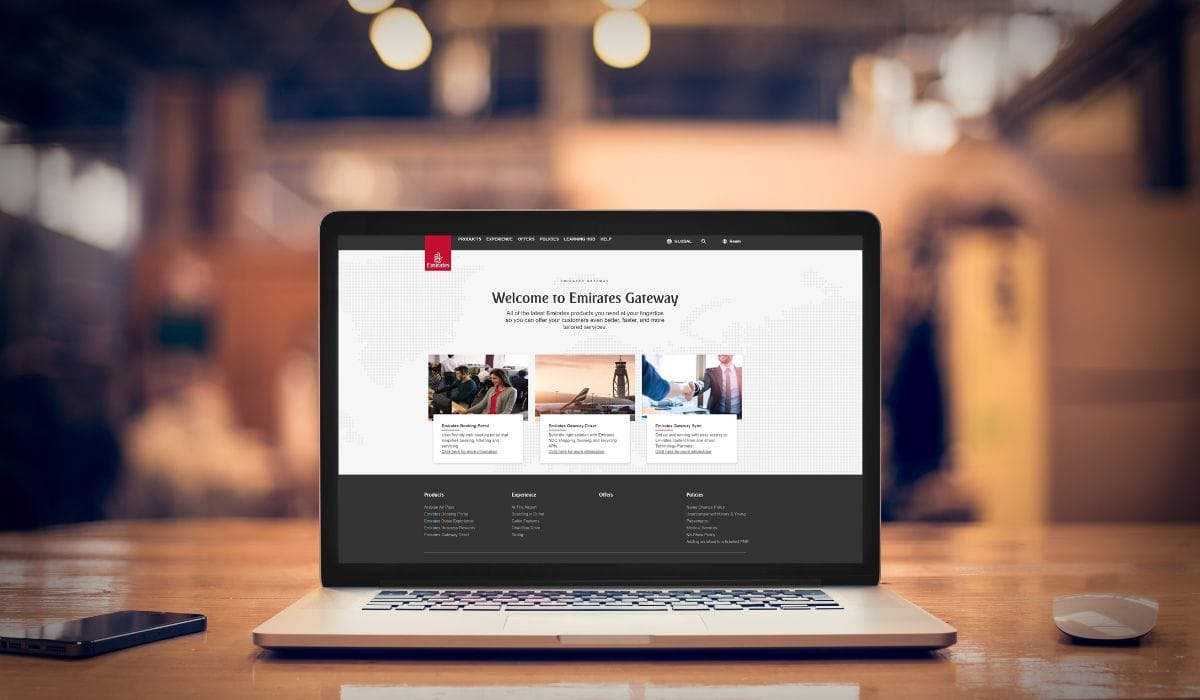
How Emirates is using NDC, OOSD, and its Gateway platform to strengthen premium merchandising, servicing, and airline retail strategy.